Ever wondered why some blog posts show up on Page 1 of Google, and others never get seen?
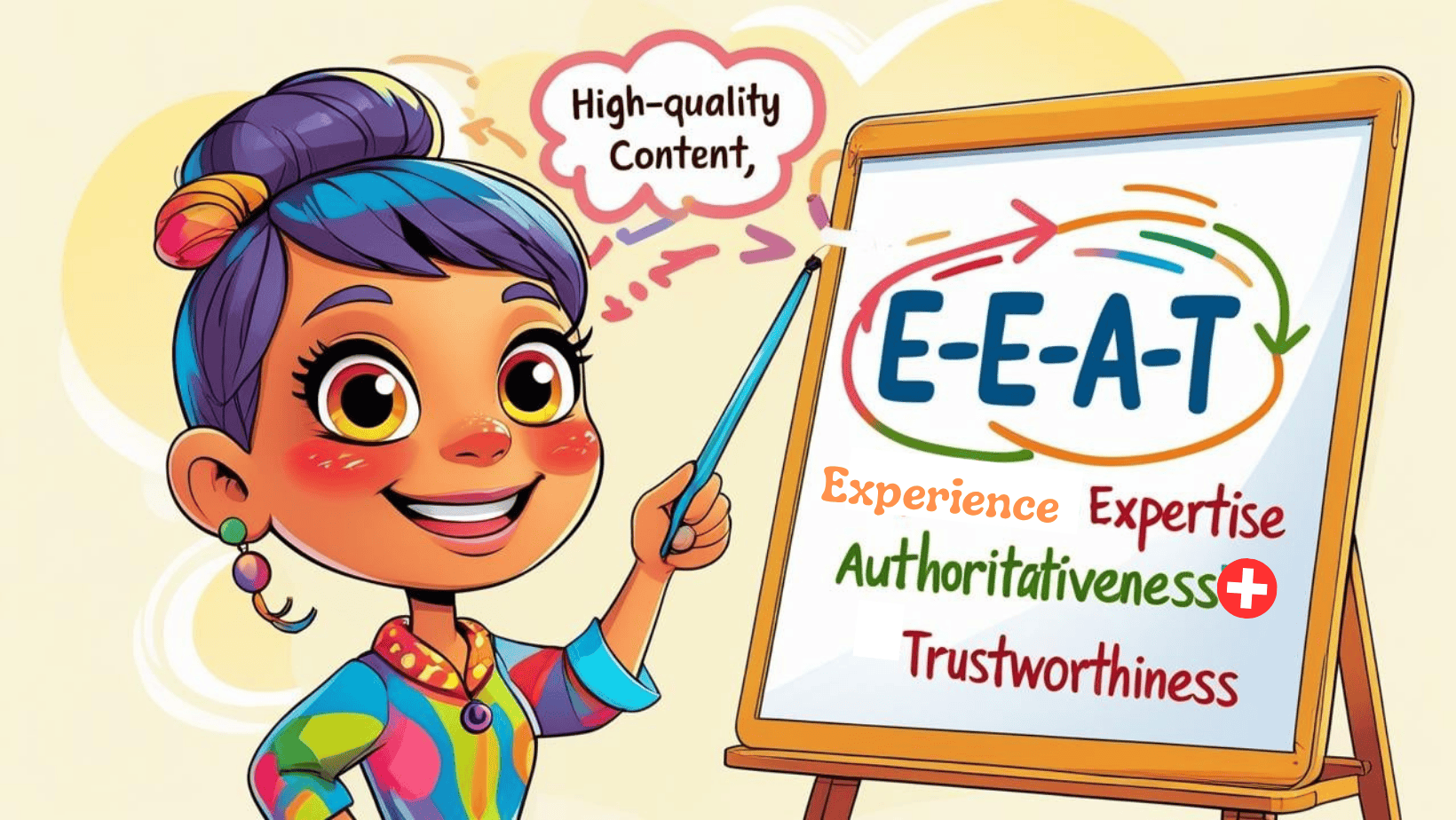
It is not just about keywords. It often comes down to four simple things Google looks for in quality content:
- Experience
- Expertise
- Authoritativeness
- Trust
Together, these make up a framework called E-E-A-T. And in 2025, it is one of the most important things to understand if you want your website to rank.
In this article, I’ll walk you through:
- What Each Part Of E-E-A-T Means
- Why It Is More Important Than Ever In 2025
- How I Apply E-E-A-T Across My SEO Agency & Client Projects
- 11 Ways To Apply E-E-A-T To Your Website
- Frequently Asked Questions About E-E-A-T
Let’s break it down.
What Each Part Of E-E-A-T Means?
Experience: Have you personally done the thing you are talking about?
This is about first-hand, real-life involvement. Google wants content written by people who have actually done the thing they are writing about, not just researched it.
Example:
You are searching for “How to appeal a PR rejection in Singapore.”
- ❌ A freelance writer summarizing info from official websites.
- ✅ A former applicant sharing exactly how she successfully appealed her rejection, step by step.
The latter may not be an expert in immigration law herself, but her personal experience gives her content real value. That is the power of first-hand experience, and it makes her content stand out from a content piece that Ai can generate on its own.
Fun fact: Google introduced the E-A-T (Expertise, Authority, Trust) framework in its Search Quality Rater Guidelines in 2014. Only in December 2022 did Google introduce “Experience”, the first “E” in “E-E-A-T” to its quality rating framework.
Expertise: Have you studied, practiced or mastered professionally what you are writing about?
This is about your skill level or knowledge around the topic that you are writing about.
Expertise is often shown through qualifications, experience in the field, or deep subject knowledge, even without a personal story. It means that your content should show that you understand the topic deeper than someone who doesn’t have the same experience or qualifications as you.
Example: “How to appeal a PR rejection.”
- A licensed immigration consultant who has handled hundreds of successful appeals. Even if they haven’t personally been rejected, their professional knowledge makes them an expert.
While expertise and experience in the E-E-A-T framework may sound extremely similar, they can be still be differentiated
Experience = I have experienced it at least once before. This often involves the emotions of the writer.
Expertise = I have studied or practiced it deeply, and have in depth knowledge around this topic.
The table below highlights the difference more clearly:

Authoritativeness: Do others recognise you as a source of truth?
Even if you have experience or expertise, you also need to be seen as credible by others.
This can come from:
- Backlinks from respected websites
- Mentions in the media
- High ratings and reviews
- Long-standing reputation in your niche
Example: A tuition centre featured in parenting blogs, quoted by MOE forums, and with 100+ glowing Google reviews. That is authority.
Trustworthiness: Do people feel safe listening to you?
Trust is about how transparent, honest, and reliable your content feels. This affects whether users and Google take you seriously.
Ways to show trust:
- Secure website (HTTPS)
- Real author names and photos
- Citing credible sources
- Avoiding topics designed to get clicks by being overly dramatic, misleading, or exaggerated (clickbait topics)
- Showing contact information and refund policies
Below is a table form summary of what each part of E-E-A-T means:

Why Is E-E-A-T So Important For SEO In 2026?
Google’s job is to help people find the most helpful and trustworthy information on the internet. So that it remains the most used search engine in the world. That is why Google created the E-E-A-T framework to help its algorithms and human reviewers figure out:
“Can we trust this content enough to show it on Page 1?”
This is even more important for topics that can impact someone’s health, money, safety, or future. Google calls these YMYL topics, which stands for “Your Money or Your Life”
Think of:
- Legal advice
- Immigration processes
- Health and wellness
- Parenting or education advice
- Financial or investment guidance
For topics like these, inaccurate or untrustworthy advice can cause serious harm. So Google holds the content that falls under these topics to much higher standards. E-E-A-T is more stringently applied to websites in these categories.
That said, regardless of your industry, here are 3 reasons why E-E-A-T matters even more in 2025 than ever before:
- AI-generated content is everywhere
Google is flooded with content that looks polished but lacks real insight, experience, or truth. E-E-A-T helps to tell the difference between AI-generated fluff often copy-pasted from Ai models, and value-packed content written by humans with real examples and lived experience.
- Google’s Helpful Content Update
This update rewards websites that show real expertise, real people, and real value. If your content is written just to “rank,” without serving users, Google is more likely to ignore it.
- YMYL content is under extra scrutiny
If your business touches any YMYL topics, even local services like law firms, alternative healthcare practitioners and financial advice providers, E-E-A-T is no longer optional. It is critical for you to rank on Google, build trust, and win customers.
How I Apply E-E-A-T Across My SEO Agency & Client Projects
E-E-A-T is not something I talk about in theory. It is something I build into my own website and every client project that I work on.
However, I don’t apply it in the same way for every business. Each business and website has its own strengths, gaps, positioning and business model. That is why E-E-A-T needs to be personalised and not templated.
Below, I share how I have applied E-E-A-T for my own SEO agency and for one of my clients in the logistics and moving industry.
Case Study 1: SEO With Senthil (My Own Website)
Incorporating E-E-A-T into my SEO strategy helped me outrank agencies with 20 to 100 over employees within just 6 months of starting my own SEO agency. Here is exactly what I did to achieve those results:
Highlighting my experience:
I have shared my entire journey, from being a confused teenager with no clue what SEO meant to becoming a top-ranking SEO consultant in Singapore, in a full-length story on my blog here.
Because engaging videos also help immensely with SEO, I also shot and shared my journey and experience with SEO in video format here:
This isn’t just for inspiration. It tells both Google and my readers: “This person has lived through what he teaches.”
Displaying my expertise:
All my content is written or edited by me, and includes my personal stories, learnings from implementing SEO tactics for over a decade and examples.
One in depth SEO guide I recently created to share my SEO expertise is this complete SEO guide for small businesses. It includes everything from the basics of SEO to step-by-step lessons on keyword research, on-page SEO, link building and more.
These are not researched and recycled tips. They are built on what I do for real clients every day.
Showing authority through earned mentions and links:
To build authority, I have:
- Spoken on 11 podcasts including the eCommerce Marketing Podcast, ranked in the top 1.5% globally.
- Written in-depth skyscraper content with original infographics (e.g. SEO agency pricing chart for Singapore) that ranks on Page 1 and earns backlinks.
- Collaborated with link building agencies to secure placements in relevant roundups and guest posts.
All of this helps Google see that I am not just shouting into the void, and that other credible websites cite and link to me too.
Building trustworthiness with transparency and being human:
Here is how I build trust:
- My name and photo appears on my home page and my story page. I share my journey of ups and downs, while becoming a SEO consultant in my story.
- I include real testimonials and embed my Google reviews
- My site is HTTPS-secured, professionally written, and designed for clarity
- My contact page makes it easy to book a call or email me directly
I want clients to feel like they know who they are talking to even before we have spoken.
Case Study 2: Rodex Movers (Singapore)
When Roger first approached me, his site had some serious SEO issues. Toxic backlinks, outdated blog posts, unclear service messaging and no clear trust signals.
But his business was solid. Rodex had been helping people move for over 10 years.
What he lacked online wasn’t credibility, it was clarity. So we used E-E-A-T to fix that.
- We told the real story behind his business
To highlight Roger’s experience, we published his full story in a dedicated blog post titled:
From one man’s hustle to a trusted moving company in Singapore
Again, we shared Roger’s experience and journey starting Rodex Movers as an engaging video:
We also created blog content that included useful moving tips directly from Roger himself, like in our step-by-step checklist for moving house in Singapore. This was written based on Roger’s experience managing hundreds of moves.
- Every service page became a practical, helpful resource
Instead of stuffing keywords or writing generic copy, I rewrote Rodex Mover’s core service pages to:
- Explain the moving process clearly
- Include actionable tips specific to house and office moves
- Add detailed FAQ sections based on real customer questions
- Avoid fluff and show they know what they are doing
This turned his website from “just another moving company” into a comprehensive resource displaying expertise.
- We focused on reviews and recognition
To grow authority, I helped Roger:
- Improve his Google Business Profile and grow authentic customer reviews.
- Publish skyscraper content with original infographics (like this 10 best house movers article) to attract natural backlinks.
- Shortlist other listicles and directories from local media (e.g. Smart Local, Sassy Mama) where he could earn mentions and placements.
This built authority signals both for Google and for people comparing movers online.
✅ Trustworthiness: We cleaned up everything holding him back
Here is what we did to make Rodex’s site more trustworthy:
- Disavowed over 95 toxic backlinks (over 50% of all referring domains)
- Removed spammy and irrelevant blog content
- Secured the website with HTTPS
- Made contact details clear and accessible
- Created a house moving pricing estimator tool to help potential customers gauge how much they may need to pay before enquiring
All of this makes the site not only more trustworthy and Google-friendly, but more user-friendly too.
11 Ways To Apply E-E-A-T To Your Website
You don’t need a massive budget or a full marketing team to apply E-E-A-T to your content. You just need to focus on what Google is really looking for: helpful, trustworthy, human content.
Here are 11 practical ways you can start building E-E-A-T into your website — even if you are a solo founder or small business owner.
1. Add a real author name (and bio) to every blog post
Why it matters: Google wants to know who wrote the content and whether they are credible.
Tip: Link your name to a dedicated author page that includes your expertise, credentials, and a photo.
2. Tell your story (or your founder’s) somewhere on the site
Why it matters: Personal stories show lived experience: the “first E” in E-E-A-T. It also separates your content from content which can be generated by an Ai model.
Tip: Create a dedicated “Our Story” or “Meet the Founder” page. Or share a blog post about how you started your business, why you started it and some interesting snippets of your entrepreneurial journey. Even better if you can do it on video!
3. Include real-life examples or case studies in your content
Why it matters: Examples prove you have actually done what you are teaching.
Tip: Don’t just say “here is how to improve SEO”. Show how you have improved your rankings or your client’s rankings step by step.
4. Add original tips, opinions, or commentary
Why it matters: AI can rephrase facts but it cannot replicate your insights.
Tip: In every article, try to include at least 1 to 2 lines like “Here is what I have seen work best” or “In our experience, this often happens”.
5. Use clear, helpful formatting (tables, FAQs, visuals)
Why it matters: Google rewards content that is easy to understand and helpful for users.
Tip: Add a “Frequently Asked Questions” section or use side-by-side comparison tables to simplify complex info.
6. Secure your site with HTTPS
Why it matters: Google doesn’t trust sites without basic security.
Tip: Most hosting providers offer free SSL. So if your site still shows “Not Secure,” fix that immediately.
7. Show your face (and team) on the site
Why it matters: Real humans build trust. It is also harder to fake credentials when faces are visible.
Tip: Add headshots to your About page, Contact page, and Author bios.
8. Be transparent with pricing, services, and contact info
Why it matters: This shows you are a real business with transparent prices. It attracts website visitors that are most interested in your services and can afford your services to contact you.
Tip: Include a pricing table or at least ballpark figures, a phone number, and a proper contact form or call-booking link.
9. Collect and display authentic testimonials or reviews
Why it matters: Social proof builds both authority and trust.
Tip: Embed Google Reviews, add a testimonial slider, or link to your business profiles on platforms like Clutch or Trustpilot.
10. Get mentioned or featured on other websites
Why it matters: Backlinks from reputable sites help prove your authority in your field.
Tip: Reach out to podcasts and blogs in your niche, contribute guest posts, or get listed in local or industry roundups.
11. Keep your content updated and accurate
Why it matters: Outdated or incorrect information erodes trust and signals poor quality.
Tip: Set a recurring task to review and refresh key articles every 6 to 12 months.
You don’t need to do all of these at once. Start with 3 to 4 changes you can implement this week and build from there. The goal is progress, not perfection.
How To Self-Assess Your Content for E-E-A-T
If you already have content on your website, blog posts, service pages, landing pages, or FAQs, now is the time to check if they are actually helping you rank and build trust.
Use these questions to:
- Spot weak points
- Uncover gaps in credibility, clarity, or depth
- And identify easy improvements to help your content rank better
16 Self-Assessment Questions From Google
These questions are taken directly from Google’s internal documentation including its Search Quality Evaluator Guidelines and Helpful Content Update. Use them as your baseline.
Content Quality & Originality
- Does the content provide original information, reporting, research, or analysis?
- Does it offer a substantial, complete, or comprehensive description of the topic?
- Does it avoid simply copying or rewriting from other sources?
- Would someone reading this page feel they’ve learned something meaningful?
Expertise & Author Credibility
- Is the content written by an expert or enthusiast who clearly knows the topic well?
- Does the content have clear sourcing, background, or evidence to support claims?
- If someone researched the author/site, would they trust the source?
- Would you feel comfortable trusting this content for health, money, legal, or life decisions?
Presentation & Production
- Is the content free from spelling or stylistic issues?
- Is it well-written and well-structured for clarity?
- Does it avoid clickbait-style headlines or exaggerated claims?
Search Intent & Value
- Does the content provide more value than other pages in the search results?
- Is it the kind of page you’d bookmark or share with a friend?
- Would someone leave your page feeling satisfied — or like they need to search again?
Google’s Final Litmus Test
- Would you want this content to be referenced by others?
- Would you want this page to be seen in Google’s top search results?
Bonus: E-E-A-T Deep-Dive Questions From SEO With Senthil
These additional questions help you look at your content specifically through the lens of Experience, Expertise, Authoritativeness, and Trustworthiness.
Experience
- Have I included any first-hand stories, examples, or insights in this piece?
- Does this content reflect real-world involvement or just theoretical knowledge?
- Would someone feel that the author has genuinely “been there, done that”?
Expertise
- Does the content show deep understanding, or just surface-level advice?
- Have I added expert opinions, credentials, or proof of results?
- Is the content written (or reviewed) by someone with actual knowledge of the topic?
Authoritativeness
- Has this page earned any backlinks, social shares, or media mentions?
- Is the website or brand known in the industry or niche?
- Are we showing industry-specific awards, recognitions, or “as seen on” badges?
Trustworthiness
- Is the author clearly identified with a real name, photo, and bio?
- Does the page link to trustworthy sources or include citations where needed?
- Is the site secure (HTTPS), updated, and free from exaggerated clickbait topics?
Pro Tip:
Copy and paste this full checklist into Google Docs or Notion, and create a duplicate for each major piece of content you want to review.
You don’t have to overhaul everything at once. Even improving 1 to 2 areas per article can create stronger signals for both users and Google.
Frequently Asked Questions About E-E-A-T
Get more clarity on what E-E-A-T is, how it works, and how to apply it.
What is E-E-A-T in SEO?
E-E-A-T stands for Experience, Expertise, Authoritativeness, and Trustworthiness. It is a framework Google uses to evaluate whether your content is genuinely helpful, credible, and trustworthy. The stronger your E-E-A-T, the more likely your content is to rank well.
What is the difference between E-A-T and E-E-A-T?
E-A-T originally stood for Expertise, Authoritativeness, and Trustworthiness. In 2022, Google added a second “E” for Experience to emphasize the value of first-hand, real-world knowledge.
For example, a blog post about appealing a PR rejection is more valuable if written by someone who has actually been through the process, not just researched it.
Is E-E-A-T a ranking factor?
No, E-E-A-T is not a direct ranking factor. You won’t find a specific “E-E-A-T score” used in Google’s algorithm. But it plays a major role in how Google evaluates the overall quality of your content and website: especially for topics that affect people’s health, money, or safety.
Instead of treating E-E-A-T like a checklist, think of it as a mindset for creating content that genuinely helps people. When your content delivers what users naturally expect, real experience, clear expertise, and trustworthy information, it builds trust with both your audience and Google.
E-E-A-T doesn’t guarantee rankings, but it significantly increases your chances of earning them over time.
What are E-E-A-T levels?
Google doesn’t treat E-E-A-T as a simple pass/fail test. Instead, it evaluates content on a sliding scale (from very low to very high E-E-A-T) depending on the topic and context.

The more sensitive or impactful your topic (like health, finance, or legal), the higher the E-E-A-T bar you need to meet.
What is YMYL content?
YMYL stands for Your Money or Your Life. These are topics that could impact a person’s health, safety, financial stability, or overall well-being.
Examples include:
- Health or medical advice
- Financial planning or investment tips
- Legal guidance
- Immigration or government policy
- Parenting, education, or mental health advice
Google holds YMYL content to stricter standards, and E-E-A-T plays a major role in whether or not this content ranks. See table below.

What are Search Quality Raters?
Search Quality Raters are real people hired by Google to evaluate the quality of search results. They use a document called the Search Quality Evaluator Guidelines, which includes detailed criteria on how to assess E-E-A-T.
Their ratings don’t directly affect your rankings, but they help Google train its algorithms to reward high-quality, trustworthy content.
What is the Helpful Content Update?
Google’s Helpful Content Update was introduced in 2022 to prioritize content written for people, not just search engines.
It targets pages that:
- Offer no original value
- Are stuffed with keywords or clickbait
- Are clearly designed to “rank” rather than help
E-E-A-T is a big part of this update. The more your content reflects genuine expertise, experience, and helpfulness, the better it is likely to perform.
How can I show E-E-A-T if I am not a big brand or expert?
You don’t need to be famous. You just need to be real, clear, and helpful.
Start with:
- Sharing real-world stories or results
- Adding a proper author bio and face to your content
- Showing reviews, testimonials, or client outcomes
- Citing sources and avoiding clickbait
- Publishing long-form, genuinely useful content in your niche
Even small businesses and solo creators can build high E-E-A-T over time.
How do I incorporate E-E-A-T into AI-generated content?
If you are using AI to create content, you need to add human depth. AI alone cannot show your experience, personal insights, or trustworthiness and Google knows it.
Here is how to elevate AI content with E-E-A-T:
- Add personal examples, real client outcomes, or first-hand tips
- Clearly attribute the content to a real person or reviewer
- Cite trustworthy sources
- Improve the structure and voice to sound more human and value-driven
- Avoid generic content, say something new and value add to the content
AI can help you draft faster, but only you can make it trustworthy.
How do I know if my content has strong E-E-A-T?
Use the self-assessment checklist above to evaluate your content. You can also ask yourself:
- Does this feel helpful, original, and trustworthy?
- Would I feel safe acting on this advice if I were the reader?
- Would Google trust this content enough to show it on Page 1?
If you hesitate, there is room to improve.